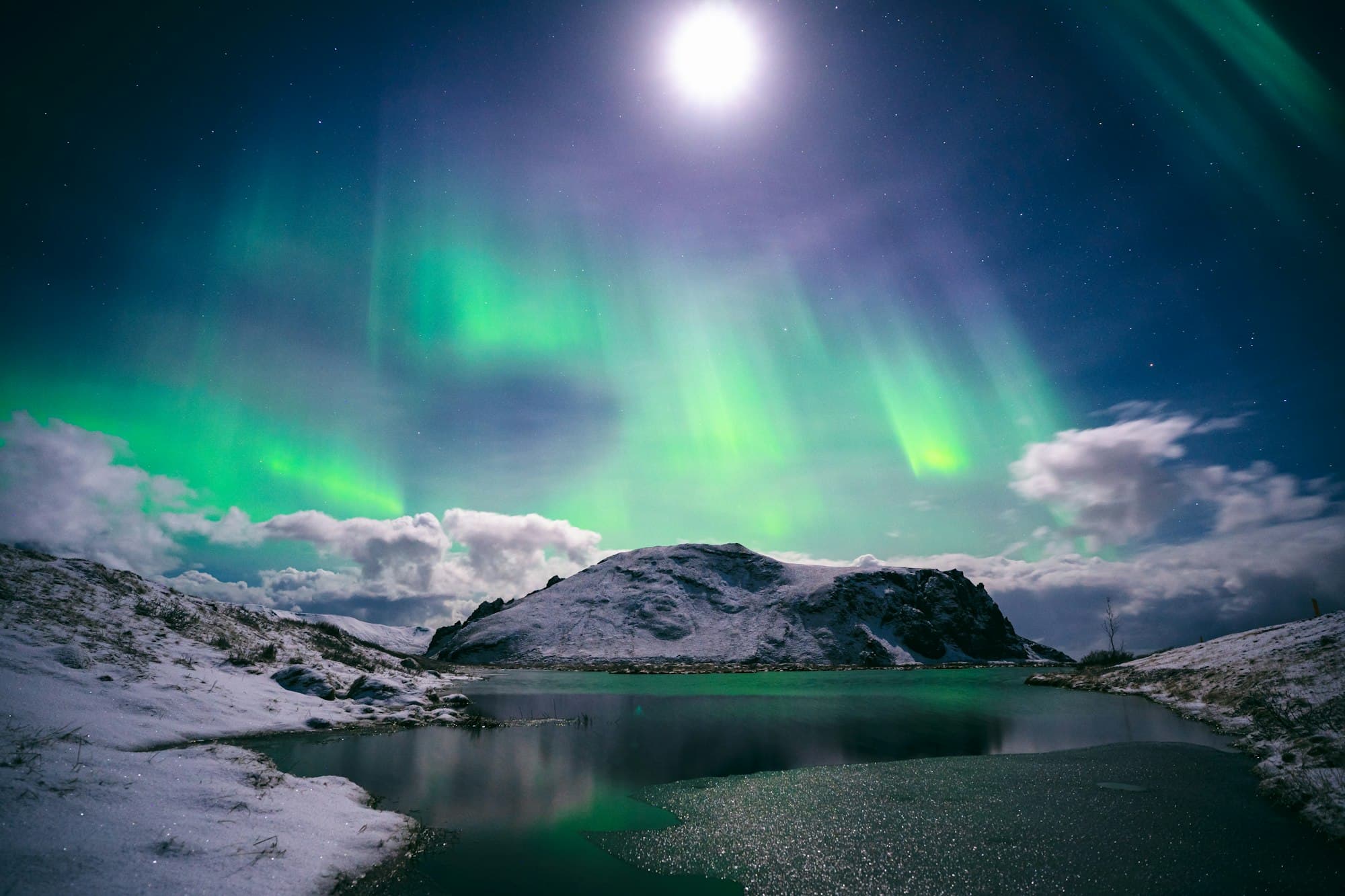
Best Time to See the Northern Lights in Iceland
Seeing the aurora is a mix of three things lining up: dark enough skies, clear enough weather, and enough solar activity. You can plan around the first one completely and the second one partially. The third is out of anyone's control.
Season
The aurora is present year-round, but it's only visible when the sky is dark enough, which rules out Icelandic summer almost entirely, since late May through July has near-continuous daylight. The realistic viewing season runs roughly late August through mid-April, with the longest, darkest nights (and therefore the most viewing hours per night) in December and January.
Weather
Clear skies matter more than most people expect. A strong aurora is invisible behind cloud cover. Iceland's weather is genuinely unpredictable and changes fast, so checking a short-range cloud-cover forecast the same evening is far more useful than picking a date months out based on general seasonal odds.
Getting away from light pollution
Reykjavik's city lights wash out all but the brightest displays. This is the main reason organized northern lights tours exist: a minibus or small group can drive 30–60 minutes out to a dark, open area with a wide horizon, which dramatically improves visibility compared to viewing from downtown.
Practical tips
- Give yourself multiple nights if the aurora is a priority. No single night is guaranteed, regardless of season.
- Many tour operators offer a free reschedule if clouds or low activity ruin a given night, worth confirming before booking.
- Bring a way to check activity levels for your own peace of mind, but treat clear skies as the deciding factor over any single number.
- Dress for standing outside in winter temperatures for 20–40 minutes at a time; the wind chill matters more than the air temperature.