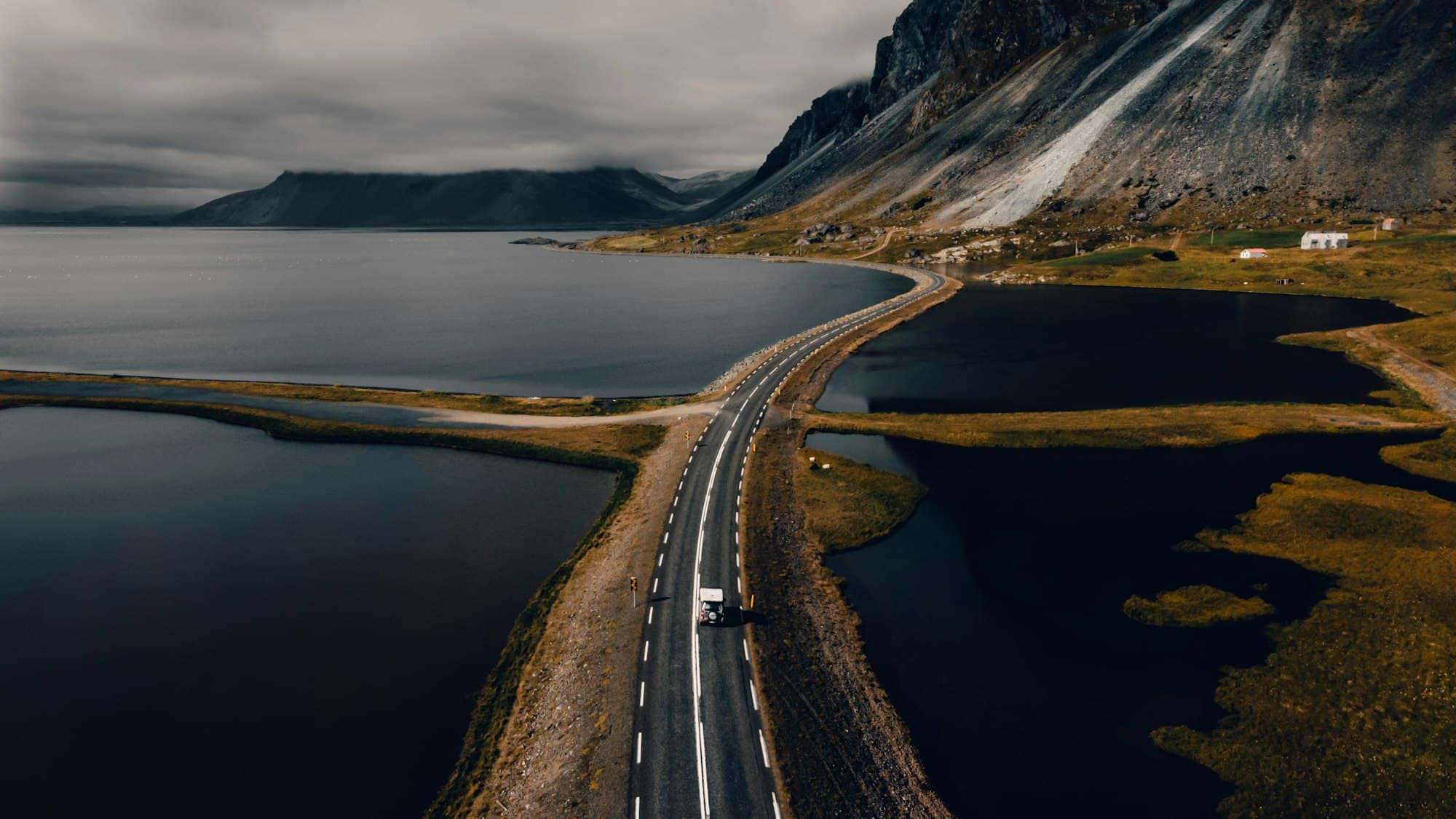
Renting a Car vs. Taking Tours in Iceland
Neither option is objectively better. It depends on the season, your driving experience, and how much flexibility you actually want versus how much you'll use.
When a rental car makes sense
- You're visiting between roughly May and September, when roads are clear and daylight is long.
- You want to stop wherever you like and set your own pace, especially along the South Coast or the Ring Road.
- You're comfortable driving in unfamiliar terrain, including gravel sections and single-lane bridges.
- You're traveling with 2–4 people, which usually makes a rental cheaper per person than joining paid tours for every stop.
When a guided tour makes more sense
- You're visiting in winter (roughly November–March). Wind, ice, and sudden whiteout conditions are common, and Icelandic winter driving catches out even experienced drivers from milder climates.
- The route involves an F-road (Iceland's marked highland roads). Most rental insurance won't cover standard cars on them, and they require a 4x4 and local knowledge.
- You want glacier hikes, ice caves, or other activities that legally require a certified guide and specialized gear regardless of how you get there.
- You're traveling solo and would rather split the cost of a shared coach than rent a whole car alone.
- You'd rather look at the view than the road, especially true for dramatic routes with frequent one-lane bridges and blind curves.
Cost, roughly speaking
A rental car plus fuel and (recommended) gravel/sand protection insurance often costs more per day than people expect, and that's before parking or the extra night you might need if weather slows you down. A day tour bundles transport, a guide, and often gear into one fixed price, usually the better value for a single activity like a glacier hike or the Golden Circle loop, even if it's less flexible on timing.
The middle path
Plenty of visitors do both: rent a car for flexible days around Reykjavik and the South Coast, then book a guided tour specifically for activities that need certified guides, like glacier hikes and ice caves. That way the car handles logistics and the tour handles anything that actually requires training and gear.